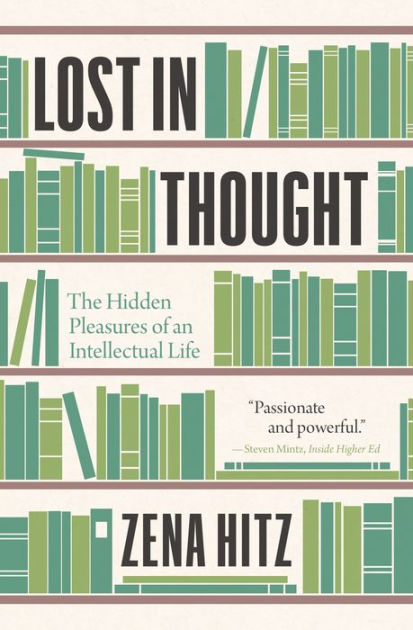
Real learning always starts with honest inquiry. So, a few qualifiers. Real learning is different from “getting a grade,” though associated confusions abound. My daughter just completed Kindergarten at the local public school and loved it. By the end of the year she could read and write and do basic math. They spent their days coloring, drawing, doing crafts, reading, checking out books from the library, dabbling in music and art, playing on the playground, and trying to follow the admonition to “NOT SHARE LUNCH.” This last point was less a tyrannical decree than a concern for allergies. At any rate, what a day! They showed up each morning with some expectations about how the day would go, but beyond this, they had plenty of time to think, create, and explore; to get “lost in thought.” If only we all could be so lucky. What helped make this real learning is that these tasks weren’t “graded.” Without the expectation of a singular outcome for these various tasks, my daughter and her classmates were doing them “for their own sake,” which is the primary theme of Lost in Thought, by philosopher Zena Hitz.
Let’s imagine for a second that each activity had a set outcome, and was assessed using letter or number grades. You get a B- for playing the recorder, you get an A+ for kickball, and you get a 72.5% for play-dough. As an aside, I would love to create a class called PD 101: The Play-Dough and You. The idea that these tasks would be formally assessed sounds ridiculous, since we know that their teachers were inviting them to simply create and explore, with no real agenda. Granted, some tasks had set outcomes: for example, learning letters, numbers, the difference between a subject and verb, etc. But even these tasks with objective outcomes are a bit slippery if we were to assign some sort of grade to them. For example, what if my daughter “knew” her letters only when paired with a picture on a flash card? Does she really “know” them? What if she knows them, but can’t put them in an order that forms a word? My point is that real learning is done for its own sake, where, in this instance, my daughter doesn’t want to know her letters so that she can type an email to the CEO of IBM (that’s a really modern example, I know). If this were her goal, learning her letters isn’t really for its own sake, but rather possesses what Hitz calls instrumental value: value added in pursuance of something else. As adults, we do this all the time (probably most or all of the time, in fact). We wash the dishes so that we have clean dishes with which to eat our next meal. We learn how to run spreadsheets so that we can put it on our resume. Or we purchase new clothes so that others will think we’re stylish. I suppose there’s nothing inherently wrong with some of this, but Hitz encourages us to think about value and learning as an intrinsic good. What would it mean to do something for its own sake, and not solely in pursuit of something else? This might mean we wash the dishes primarily as an act of service for our family, or we learn how spreadsheets work because we are fascinated with numbers, or we buy particular clothes because they’re well-crafted and form an extension of our identity or style. All of these seem like a more dignified way to approach the tasks, and dignity is foremost in Hitz’s analysis of how and why we learn, and by extension how we might live a good life. With Christ’s command in mind, we could become child-like once again in our pursuit of real learning, dignified lives, and intrinsic values. What would life look like if we approached it as do children playing with play-dough?
The other caveat of my initial point is that real learning stems from honest inquiry. This relates back to the instrumental versus intrinsic value argument. We all want to know things, children more than anyone. But as we age, we get trapped in what Karl Jaspers calls prisons of convention and right-thinking. We tend to no longer be interested in eternal questions such as why we’re here and how we should treat each other and what a just society looks like. Sometimes the extent of our conversation with a spouse each day looks like a “Did you get more frozen waffles?” text on our way home from work. Fine enough… the kids gotta eat. But the point is that honest inquiry—questions and curiosities for which our soul longs for answer—is quite different from the instrumental knowledge or value that comes from the aforementioned text. In both cases, I do want to know something; I do have a question. I ask my wife if she picked up waffles because I want to know, but I only want to know because it has instrumental meaning for my life. If we wake up the next morning and there is nothing for the kids to eat, we know we are in for it. And again, this isn’t to suggest that the menial tasks such as grocery shopping are undignified; in fact, Hitz suggests that ordinary life is the most beautiful, and potentially the most dignified. But it’s about the “basic orientation” with which we approach life. To engage in a discussion about food in a more meaningful way might be to invite conversation about the ethics of capitalism, or Americans’ views on diet and health, or even a reminder to connect with my spouse in ways far more meaningful than a text about what’s in our freezer.
To return to my daughter’s Kindergarten class, when they ask genuine questions (honest inquiry), it’s not because they want something from the answer per se. At this age, they don’t (I hope) have ambitions of being a corporate titan or “Senior Financial Analyst.” Nothing wrong with being those things—we need those things—but children start with honest inquiry because they want to know for its own sake; they exhibit Aristotle’s notion of intellectual curiosity, a virtue which can be formed through practice. Would it be that as adults we could return to honest inquiry that results in real learning. No economic ambition in mind, no social ladder climbing, no “invisible hierarchies,” to quote Hitz. What if we asked because we’re mystified and captivated by the possibilities that lay on the other side of our questions? We could move past the surface to a more authentic reality. We could exceed a life that otherwise consisted of mindlessness and sought-out distraction. Hitz refers to the latter as the love of spectacle.
Do we suppose that anyone, toward the end of his or her life, wishes they could have viewed just one more social media post, or sent one more email? These tasks are part of life—I send emails every day—but perhaps we could reorient ourselves and the way we approach life—including necessary tasks—such that in everything we do, we aspire to genuine service, authentic interaction, and what Hitz calls “communion.” Is there communion to be had in folding laundry, reading books, and watching TV at the end of a long day? Yes. The key is to mold what Hitz calls our “basic orientation,” which is our outlook toward life that is determined by our highest goods and values. But, notably, our basic orientation can be formed consciously or unconsciously, which is to say passively. In the latter, society can easily form our basic orientation if we passively subscribe to what the world esteems as highest goods: wealth, prestige, status, instant gratification, and, really, power. If we passively accept the world’s highest goods and values, then our approach to life is structured around obtaining these things. We choose a career solely by how much money and prestige it brings us, we pursue a partner because of what they provide us, we spend our free time by how much gratification or distraction it can provide us with the least amount of effort. We reach the top of the social and economic ladder—we’re an Americanized version of Nietzsche’s Übermensch—and then we die. Or… we can begin the difficult work of reforming our basic orientation such that we pursue dignity, both for ourselves and for others, we return to ambitionless curiosity, meaningful interactions, space to be lost in thought, and time to commune with others. Hitz suggests that true communion is the outgrowth of our inward pursuit of intellectual life. Counterintuitively, then, the isolated and inward nature of intellectual life spills over into communion with others. We want not to dominate others with our information, but share our quest for more knowledge with them; we invite others to explore and create with us. As Hitz writes, “The intellect has no limit to its subject matter: it reaches greedily for the whole of everything.” Let’s be greedy for the good things in life, together.
To do this, we have to uproot just about everything we’ve been trained to think and do, and return to that childlike state but in our adult bodies. Hitz describes this process as a sort of violent intellectual awakening; we must disrupt ingrained patterns of being to aspire to more. Envision a life where everything isn’t a means to something else. We could pursue college—or even and especially simply a book in our living room—for its own sake: real learning. We could get lost in thought as we complete the necessary tasks of the day such as making coffee, getting ready for work, eating lunch, emailing coworkers, commuting home, putting our children to bed, and even watching an episode of The Office for the hundredth time. Imagine doing these things not because of what they enable us to do next, but because they have intrinsic value in and of themselves. Making coffee becomes a time to appreciate nature, the human ingenuity that created the coffee maker, the truck drivers that delivered to the store, the job that provides the means to purchase it, and not least of all, the hands that grew and picked the beans. It becomes a ritual, a sort of piety in the ordinary. Whether we drink coffee on the back porch while meditating on the day ahead, or with others amidst the possible chaos of an early morning, it becomes a time to commune. We have communion with God, or our spouse, or kids (as I confess that my one year old sneaks my last sip of coffee every morning), or even with the unknown hands and minds that went into growing it. We cultivate appreciation and communion through the otherwise rote task of making coffee. Instead of checking our phone while we wait for it to brew, what if we got lost in thought? And all of this could be ours within the first ten minutes of the day, not to mention the countless other ways we could approach and reframe the various tasks of our days, years, and lives. That would be a good life lived in communion; that would be something real.
Initially, I thought I would write one introductory paragraph and then summarize Hitz’s main points. Now I’m 1,700 words in and have only introduced a few ideas. So in the spirit of getting lost in thought, let’s pause and digest (there’s room here for another coffee reference but I don’t have it yet; I’m going to let it percolate). We have the opportunity to read this essay right now in the spirit of reframing our basic orientation. Instead of wanting to rush through it so we can capitalize on the main points and immediately be “smarter” or “richer” or have some sort of intellectual power over others, what if we pause, breathe, and see where the unbounded intellect takes us? As Hitz writes, “If intellectual life is not left to rest in its splendid uselessness, it will never bear its practical fruit.” May we all pursue this kind of uselessness today. May we delight in the fruits of free inquiry like intellectual play-dough.

 kollinfields.com